Lighthouse story
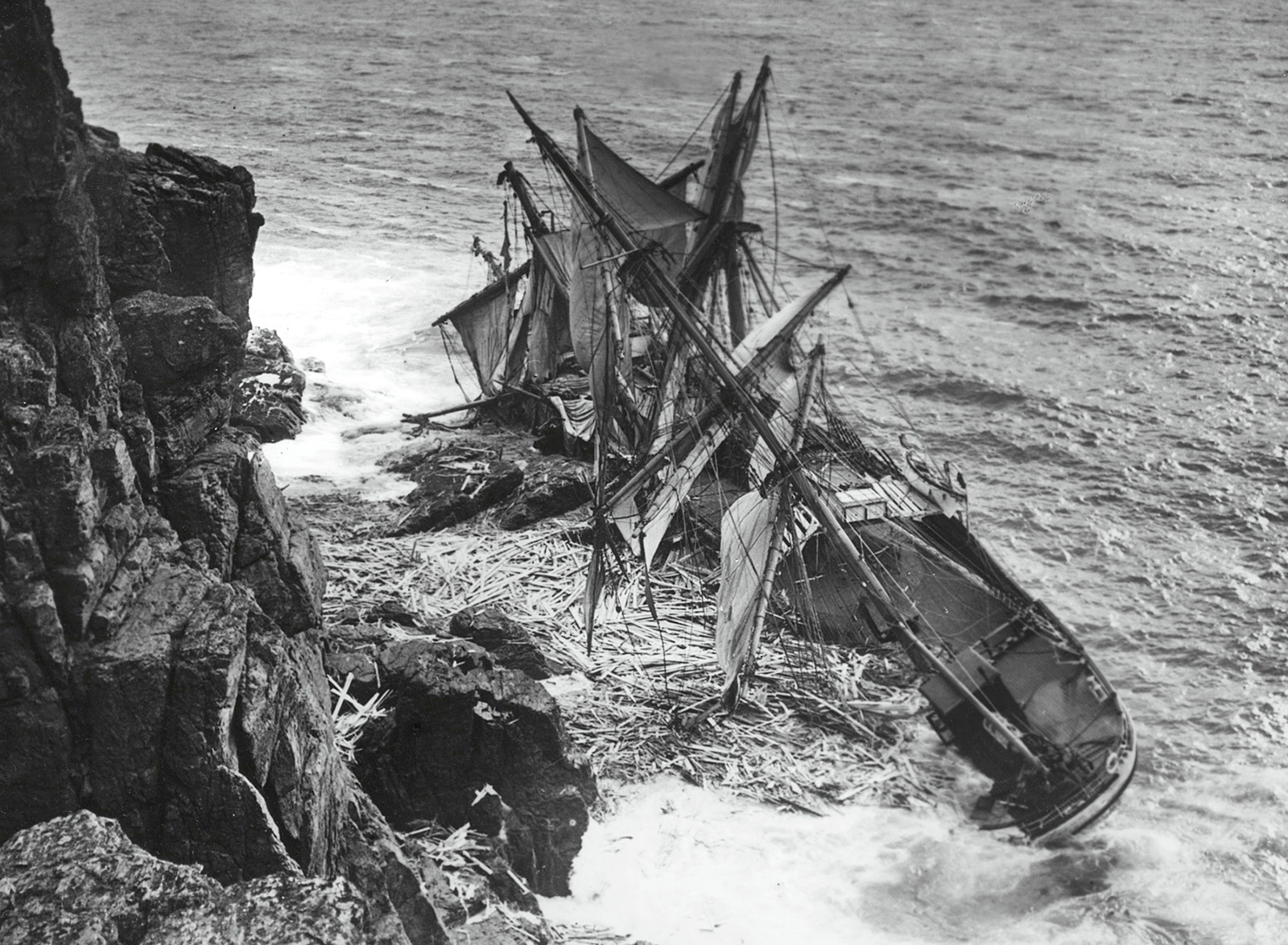
Wreck plundering on Kullaberg
The original Germanic law of the shore was harsh on the shipwrecked. In its most extreme form it gave coastal people the right to seize stranded ships and make the shipwrecked their slaves. The old Scanian Law did give the shipwrecked some protection early on, but medieval records tell us that the old customs were practised long afterwards. On Hallands Väderö the following prayer was said in the old chapel:
Good Lord, hear our prayer:
Put out the light on Väderö,
so that ships from distant lands may run aground upon our strands.
But spare our men.
The maritime law of 1667 clearly regulated the relationship between the shipwrecked and coastal people: lighting false beacons or taking goods washed ashore could mean the death penalty. At the same time, however, a legal right to salvage money was granted.
In 1734 the law was tightened further: killing shipwrecked people was punished with the law's harshest penalty, death by breaking on the wheel.
In 1761 it was decreed that anyone who damaged anything on a lighthouse would be punished with 32 pairs of strokes of the rod and ordered to repair the damage. If the damage led to a shipwreck, the punishment was beheading.
The sea's tribute
Life around the mountain was hard and dangerous. Every year the death registers of Brunnby church were filled with the names of the drowned. It was not unusual to begin life at sea at the age of 10, and sometimes fathers, children and grandchildren died in the same accident. The sea makes no distinction. Of the fishermen of Arild in the 1800s, the sea took half before their time. Left behind were the widows, alone with the children.
Death notice for a skipper from 31 January 1911. Below the names of his parents and siblings was the following verse:
How and when your fight was fought, no human eye has seen.
Your cries were muffled by the storm, by human ear unheard.
The blue wave became your cover, the bottom of the sea your bier.
Lord, lend us your helping hand to bear our heavy grief.