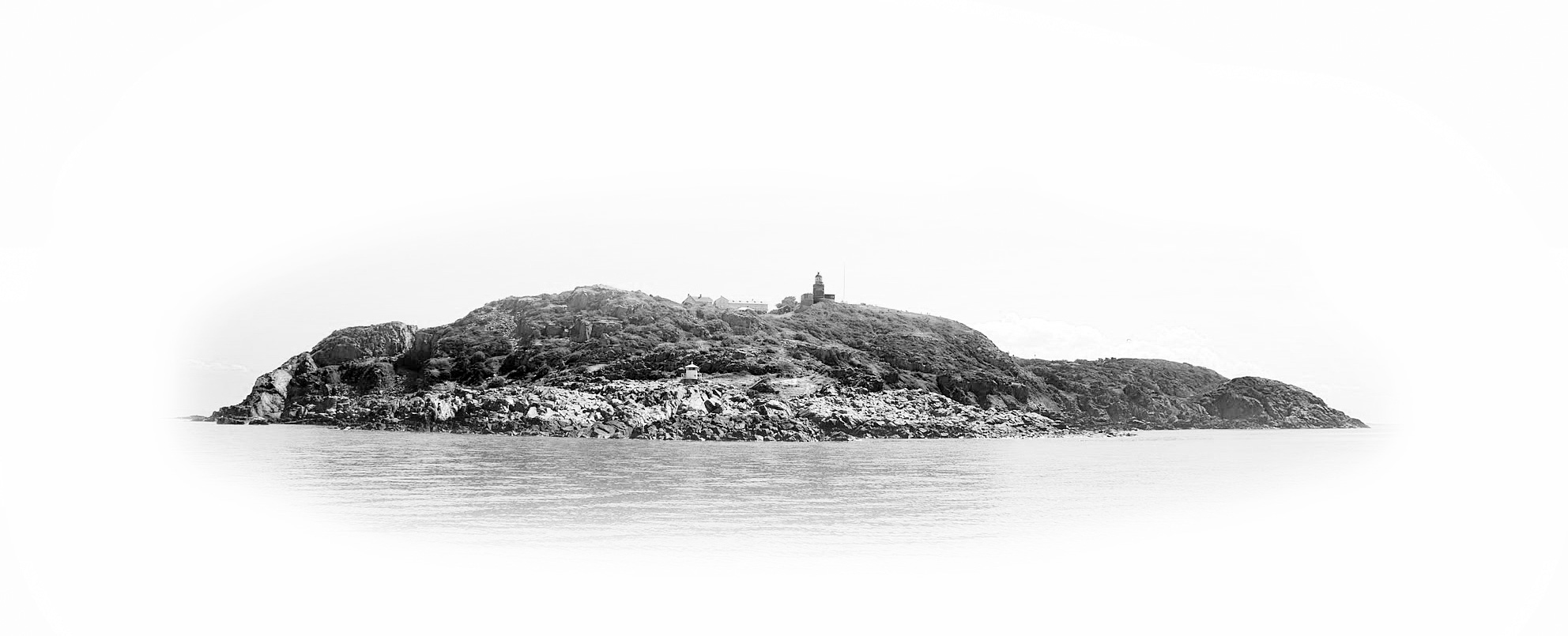
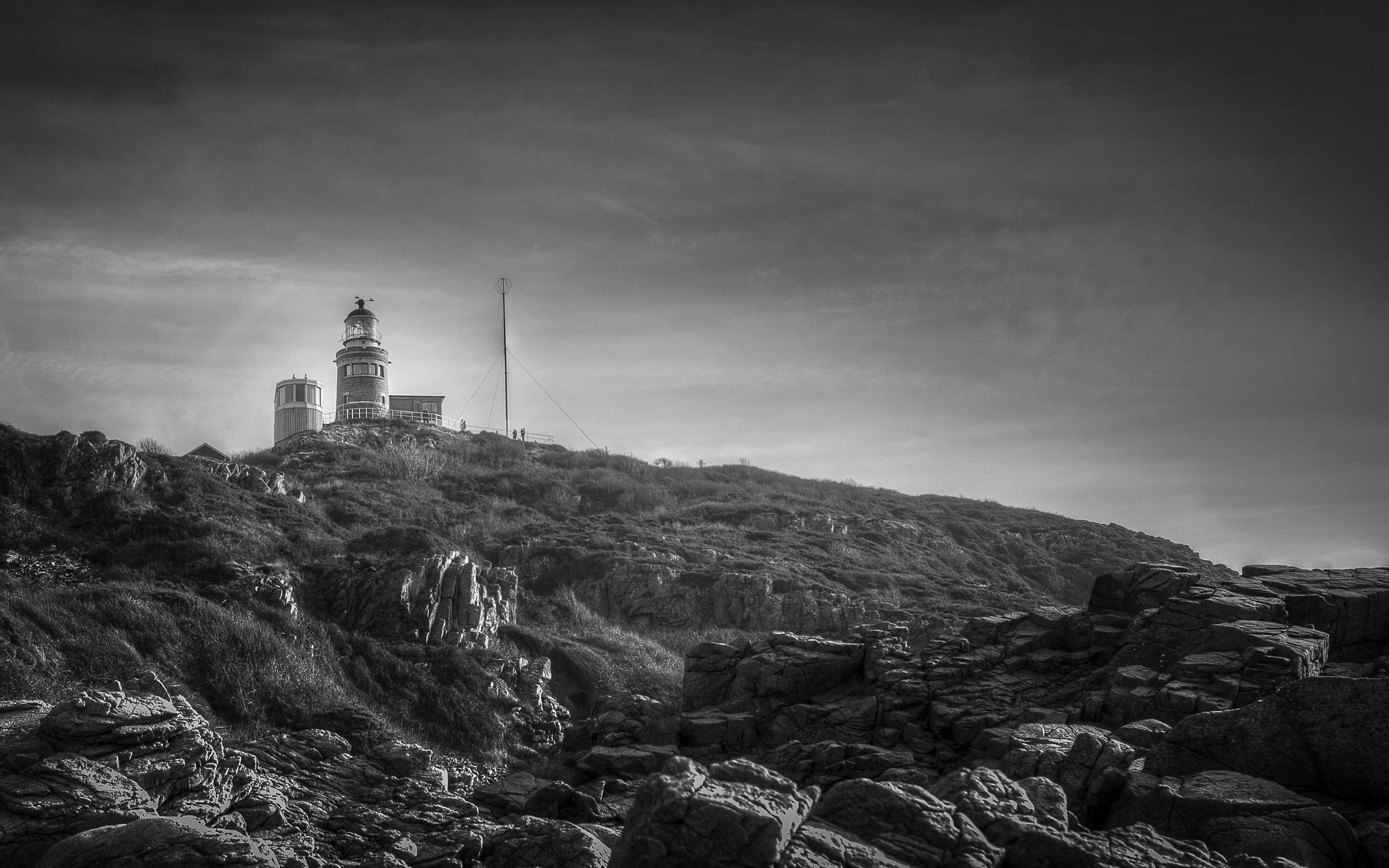
At the very tip of Kullaberg, 78.5 metres above the sea, stands Kullen Lighthouse. A light has shone here for shipping since 1561 – first from a wood fire in an iron basket, today from the most powerful lighthouse in Scandinavia.
A light station with more than 450 years of history
In 1560 the Danish king Frederick II ordered lights to be built at Skagen, Anholt and Kullen. The following year the first fire was lit on the headland, and since then the site has had six different towers. The light has come from wood fires, tallow candles, open coal fires, rapeseed oil, paraffin and, finally, electricity.
Today's tower was built in 1899–1900 from Kullaberg's reddish-grey gneiss from Ablahamn. It was built by a team of travelling lighthouse builders from Skepplanda, who helped build some thirty lighthouses around Sweden. Read about the men who built the lighthouse.
The light
Three rotating first-order lenses, 2.55 metres in diameter and together weighing almost six tonnes, turn four times a minute. This gives a white flash every five seconds, visible up to 27.5 nautical miles out to sea, about 50 kilometres. The lens keeps turning during the day as well – if it stood still, it would act as a burning glass.
- Established
- 1561
- Height above sea level
- 78.5 metres – Sweden's highest lighthouse
- Range
- 27.5 nautical miles (approx. 50 km)
- Automated
- 1979
- Managed by
- Swedish Maritime Administration
The lighthouse has been automated since 1979 and is managed by the Swedish Maritime Administration (Sjöfartsverket). The light is still an important aid to navigation for leisure boats, while larger ships navigate with the help of the lighthouse's DGPS station. See all the facts and the full timeline.
Experience Kullen Lighthouse
The view from the lighthouse stretches across the Kattegat and Skälderviken bay towards the Øresund. The cliffs below the lighthouse are one of the best places in Sweden to spot harbour porpoises.
The waters around the point are also a graveyard: more than 200 ships have been wrecked here since the 1750s, and several wrecks still lie on the seabed. They, and the people who lived from and with the sea, are the subject of our lighthouse stories.
Opening hours and guided tours of the lighthouse are listed by the Swedish Maritime Administration (in Swedish). Directions are under Getting here.
Further reading
If you are curious to learn even more about Kullen Lighthouse in particular and lighthouses in general, here are some useful sources online.