Lighthouse story
The ice floe disaster
The war winter of 1941–42 was one of the harshest ever on Kullaberg. Week after week the mercury stayed down towards −25 °C, and the sea ice grew ever thicker. Many eked out their income by jigging for cod.
On 4 March, in an easterly wind, an ice floe broke loose and 43 people began drifting towards the open sea and Jutland. The lighthouse staff raised the disaster alarm at 14.10. The military, police, customs, air force and icebreakers were alerted, and appeals for help went out on the radio. The news spread quickly through the district. The lighthouse telephone was jammed by relatives of those who seemed to be heading for certain death.
Many heroes stepped forward that day. They were ordinary people who felt that something had to be done. Some soldiers set out in the rowing boat from the lighthouse and rescued six men. Three 16-year-olds from Mölle rushed to Ablahamn, broke the locks on a boat, reached the floe and, badly chilled and in shock, managed to rescue four men. In Mölle people took the biggest boats they could find without asking. One was carried by the farmer Hans Pettersson with horse and cart as fast as the harness would hold, through 36 cm of fresh snow on the winding road up to the lighthouse. The other was dragged across the ice along the south side of the mountain by willing men.
From among many volunteers, sea captain Hansson and two experienced brothers were chosen for one boat, and the coastguard Emanuel Andersson with two oarsmen for the other. To their dismay they saw that the floe had now split in two.
Captain Hansson quickly set off towards one of the floes and filled his boat there in dramatic circumstances. Among other things, he is said to have used his pipe as a “revolver” to control the panic-stricken men on the floe. It proved impossible to reach land, but the Danish icebreaker Mjölner managed to find and rescue them. Kristian Hansson went up to the bridge to help the officers. There was no time to rest.
Emanuel Andersson's oarsmen ran up towards the lighthouse to fetch better equipment when, to their horror, they heard Andersson say: “It's getting dark, someone has to help.”
They see him push off, alone and without a lantern. The seasoned coastguard Andersson began rowing with powerful strokes. Even so, it took him two hours to reach the ice floe in the hard, cold wind. Up on the mountain by the lighthouse stood his wife and three children, together with crowds of locals, watching the drama with growing anxiety. The two boats would not have room for everyone, people realised. Who would be saved? Who would have to stay? Terrible choices lay ahead.
“It's getting dark, someone has to help.” Oarsman Emanuel Andersson
When Andersson reached the floe, six desperate men jumped into the boat; the wind and cold had now grown stronger. With the strength of despair they steered towards the beam from the lighthouse and safety. It was a long and merciless night. At times Mjölner passed close by, but without a lantern the unfortunate men were not seen, and their cries for help were drowned out by the wind and the waves. Two of the men died after midnight, and after 14 hours in the cold and 10 hours of non-stop rowing Emanuel lost consciousness.
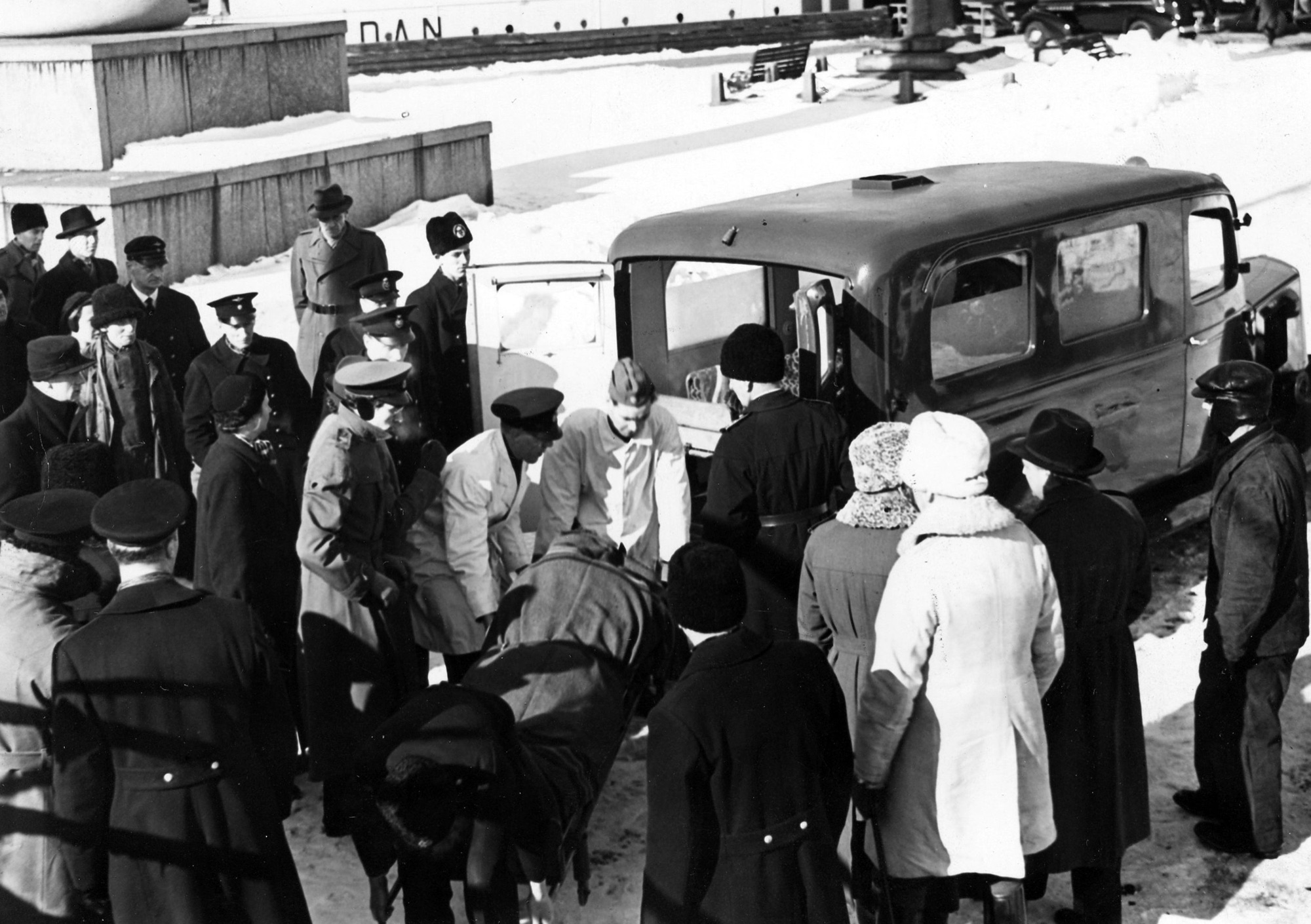
Not until dawn, at 07.35 on the morning of 5 March, did Mjölner sight Andersson's boat, 12 nautical miles north-west of the lighthouse. A terrible sight met the men on the bridge. The rowing boat looked like an ice coffin; everyone on board was covered in ice and believed to be dead. Kristian Hansson jumped down and examined the men. Someone moved an arm, and they were all lifted aboard.
Afterwards it turned out that Andersson had died only a quarter of an hour before the rescue. The sea claimed three souls that ill-fated night. It could have been many more. Andersson was buried at Brunnby church. The whole district joined the funeral procession, and money was collected for the widow. As if the tragedy were not enough, the widow also died the following year, leaving three small children. On the gravestone, carved with the image of Emanuel's rowing, it says: He saved the lives of others – and gave his own.
There were many who, without hesitation, risked their lives to save others that night. We name those we know of, to save them from oblivion:
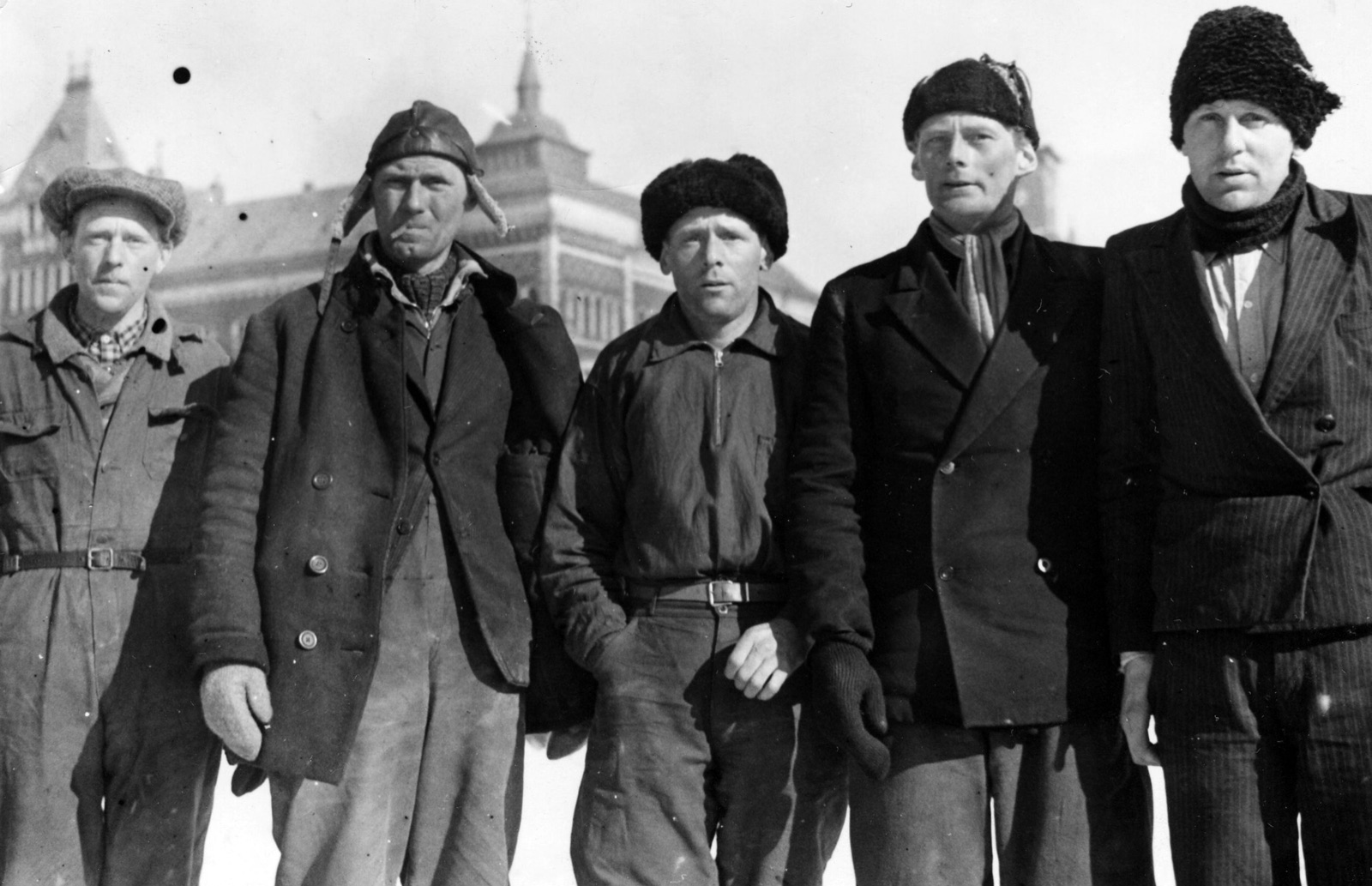
In the first boat
Hans Eklund and Bertil Persson.
In the second boat
The Mölle boys Göte Larsson, Karl Blomqvist and Åke Bengtsson.
In the third boat
Kristian Hansson and the brothers Erik and Ove Andersson.
In the last boat
Emanuel Andersson.
Recognition is also due to the crew of the Danish icebreaker Mjölner, who defied the German occupiers and did not hesitate to sail through mined waters to rescue their fellow human beings.