
Lighthouse story
The lifesaver from Mölle
“Here and there may be found men in all walks of life who neither wonder nor care how much or how little the world thinks of them. They pursue life’s pathway, doing their appointed tasks without ostentation, loving their work for the work’s sake, content to live and do in the present rather than look for the uncertain rewards of the future.” – Sumner Kimball, U. S. Life-Saving Service.
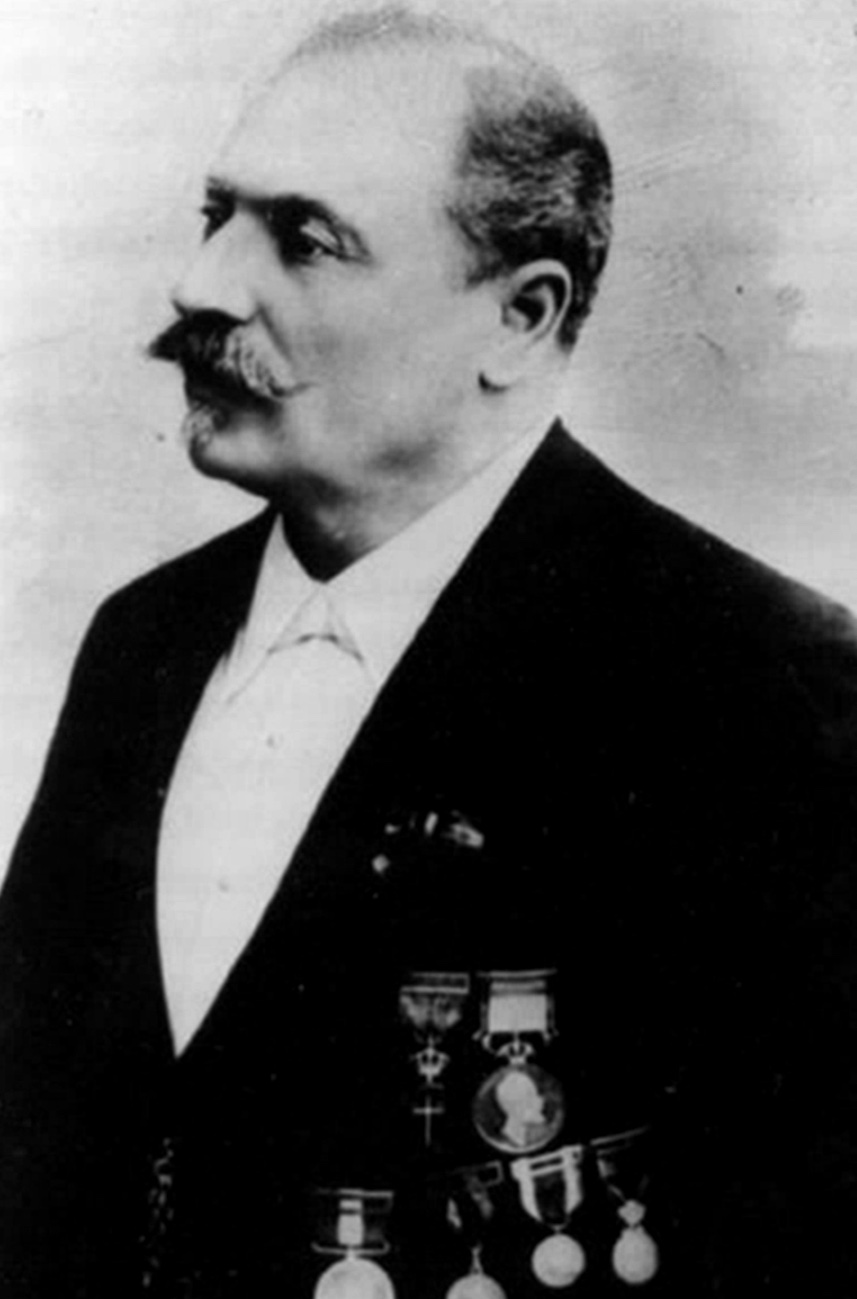
This is the story of the simple fisher boy from Lerhamn, later a sea captain from Mölle, who became a legend in his own lifetime and received honours from all over Europe.
Over a period of 38 years he managed to save no fewer than 135 people from drowning. It is all well documented in newspaper notices from around the world and in his own terse diary entries. In gratitude for his efforts he received tributes from the British government and was also awarded some ten medals, among them from the Swedish king, the German emperor and the Russian tsar in St Petersburg. And as if that were not enough, the king of Portugal appointed him “Cavalleiro da Ordem Militar de Nosso Senhor Jesus Christo”, that is, a knight of a military order.
It soon becomes clear that Hans Johnsson was an extraordinary man. A man who did not hesitate to risk his own life to save someone in distress in the hour of danger. Age, rank and nationality made no difference; it was the human being he saw and cared for.
People called him Store-Johnsson (Big Johnsson) or Store-Hans, not only for his tall figure and great physical strength, but also for the respect they felt for him as a person.
Life at sea began early. At the age of nine he signed on as a cabin boy on a ship bound for London. After his confirmation he went to sea in earnest and determinedly put aside part of his meagre sailor's wages to take the examinations needed to advance. He became a captain, first of sailing ships, then of steamships. Somewhere along the way Johnsson learned to swim, a rarity in Sweden at that time.
Reading his biography is astonishing. He made his first rescue as a 12-year-old, when a boy fell through the ice off Kullen.
“In all, 135 people. They and all their descendants can thank a simple fisher boy from Lerhamn for their lives.”
His later rescues took place over a vast area: in Stockholm's Strömmen as well as in Arkhangelsk on the White Sea, in the Maryland dock, in the English Channel, in Málaga harbour, in Stettin and Riga, out on the North Sea as well as in the Bay of Biscay and the Bosphorus. There were children who tumbled in from barges, coal carriers who plunged into the water when the gangway gave way beneath their feet, little boys who fell from quays and sailors who went overboard, fishing boats and larger ships that capsized in stormy seas, and castaways found abandoned at sea clinging to sinking ships – a never-ending stream.
On eleven occasions Johnsson threw himself into the water and swam out to the drowning himself; at other times he rowed out in a lifeboat. Together with his crew he could pick up larger groups of people in distress, operations that could take up to 15 hours.
The rescues often took place in difficult conditions, even in the dark of night and in hard October storms. And they were always carried out with his life at stake.
Icy water did not deter him: on 28 December 1874 he dived into the harbour of Antwerp. Unusually for the otherwise terse Store-Johnsson, he described in detail an incident in Riga on 16 April 1878, when a pilot's assistant fell into the water and could not hold on to the rescue line in the ice-cold current running at five knots. Without a second thought Johnsson jumped in.
That this was an extraordinary feat of strength is clear from his diary entry:
“The rescue was attended by the greatest danger to life owing to the long time spent in the water, combined with the blows received from the boat that came to help at the last moment. From the illness I contracted on this occasion I was not relieved until I had undergone two operations.”
In the autumn of 1874 things could have gone very badly. Autumn was always a dangerous time, and there were no weather warning systems. Off the west coast of Denmark, at Horns Rev, they ran into a severe storm that soon became a hurricane. It was to last a full three days. The cargo of the steamship S/S Öresund consisted of heavy barrels of tallow lashed on the afterdeck. In the heavy sea, with breakers crashing aboard, the barrels tore loose and began rolling from side to side, smashing everything in their path.
Store-Johnsson and two strong crewmen toiled with the strength of despair to throw the heavy tallow barrels overboard. Suddenly a huge sea struck, making the ship heel so that all the barrels rolled towards the listing side. Exactly where they hit, Hans happened to be standing. The crew feared he had been crushed. But no, Store-Johnsson got up again. He did, however, have to go into the captain's cabin for an hour or so to recover during the raging storm, before continuing the rescue work. By Johnsson's standards, this suggests he had taken a serious battering.
The hurricane raged on relentlessly, and they manoeuvred as best they could, day and night. How did the men from Mölle feel in the raging sea? Did they curse their fate or pray to their god? Did they think of their loved ones?
Hans Johnsson did not write about his feelings in his diary. They probably thought less about their own lives than about saving the ship.
The next morning the alarm was raised: the scuttles down in the forecastle had broken and water was pouring in. All attempts to seal them failed. Soon the water stood a metre high and the bow began to dip. Iron plates were made, and the following morning Hans Johnsson made a last desperate attempt to seal the scuttles. Half-naked, he dived into the now almost completely flooded forecastle, where all kinds of debris floated around. The boat heeled in the waves, and Hans Johnsson was as much under the water as above it. Only a foot of air space remained. After half an hour of desperate work in the worst imaginable conditions, Johnsson against all odds managed to fix the iron plates.
Hope returned among the men, and the boat could be pumped dry. All the coal had got wet, so they had to burn everything combustible in the fittings, such as chairs, tables and panelling. Battered, after almost superhuman efforts, they came chugging into the German port of Cuxhaven on the fourth day. They had saved boat and crew and received great recognition from several insurance companies for the feat.
A short note in the diary tells of the event, but it reached the public through the newspapers. Johnsson was not a man of big words, but he was careful with his notes. The letters he left behind give the impression of a kind and broad-minded man. It is also striking how incredibly well travelled the sailors from Mölle were.
At a time when most people hardly went beyond their parish boundary, Hans Johnsson got to see many remarkable places all over the world. He carried emigrating Jews from Palestine to Italy, and Muslim pilgrims to Mecca. He climbed the pyramids and took in the view over the Nile, as one of few Swedes at that time.
During his years in the Mediterranean he took an interest in nature and culture and collected a wealth of exciting and interesting objects, which were kept in the family's large tall cabinet.
Here children and grandchildren were sometimes allowed to watch as he opened the cabinet and showed the toothed, metre-long sword of a sawfish, Egyptian scarabs thousands of years old, iridescent hand-blown tear bottles and wooden objects from holy places in Palestine. Here too, in a small wooden box, was kept the rifle bullet that killed his own son in the Boer War in South Africa. But how 52 sailors from Mölle and the Nordic countries, alone at Magersfontein on 11 December 1899, fought 8,000 British elite soldiers almost to the last man is a different story altogether.
He could save many lives, but not his son's. He never mentions the grief, but it took him two months to return to work after the news of the death.
The old sea captain's own death was natural, on land. On 5 August 1909, on the first day of the general strike, Hans Johnsson departed this life, but through his deeds his memory lives on.
29 Germans
26 Norwegians
25 Swedes
17 Englishmen
15 Spaniards
9 Finns
5 Russians
4 Frenchmen
3 Austrians
1 Belgian
1 Portuguese
In all, 135 people. They and all their descendants can thank a simple fisher boy from Lerhamn for their lives.