Lighthouse story
The long journey of the lens
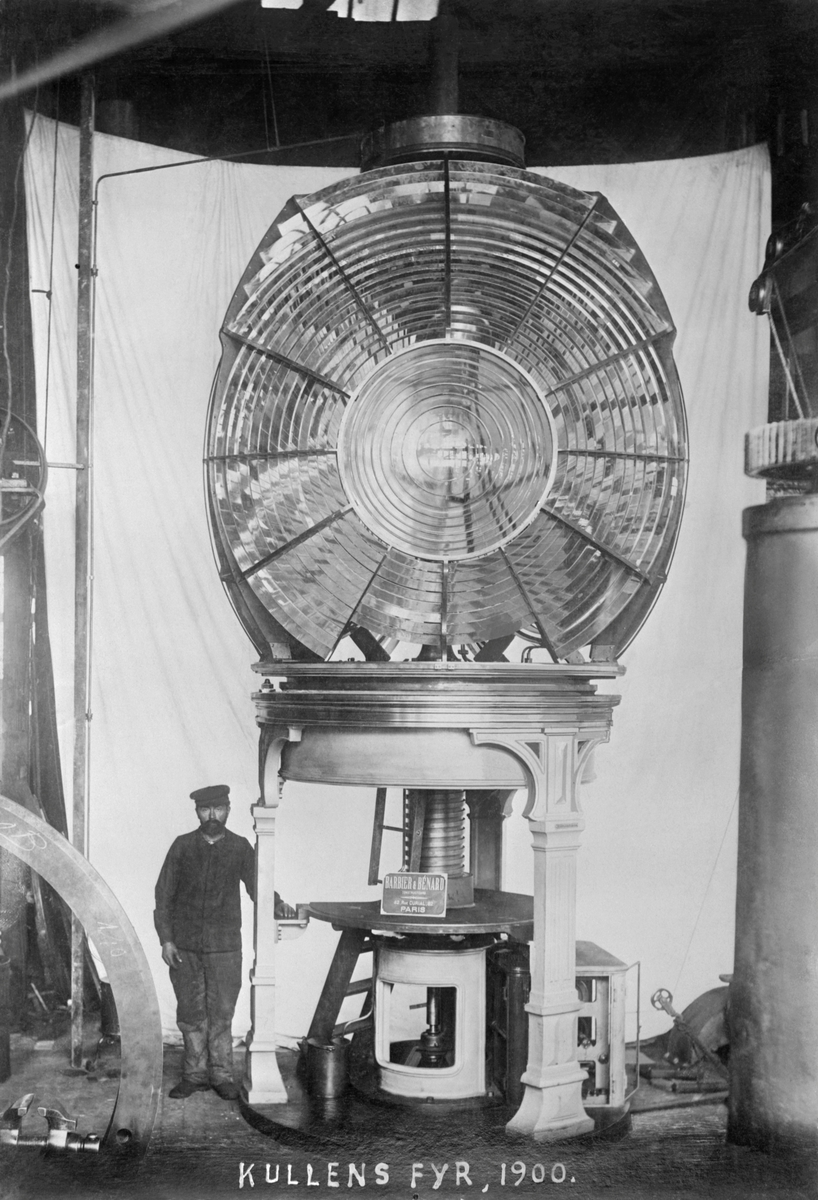
When the new lighthouse was built in 1900, the aim – just as before in the history of Kullen Lighthouse – was to use the latest and most efficient technology. Only the best was good enough. The choice fell on the Frenchman Augustin Fresnel's ingenious prism design, which gathered all the rays of the lamp into a single powerful beam with a long range. The largest model of this lens, a 1st-order lens, would also make Kullen Lighthouse the most modern and most powerful lighthouse in all of Scandinavia. That was the lens they wanted.
The great prism lens could be bought from the firm Barbier et Benard at 82 Rue Curial in Paris. The treasure cost all of 60,000 riksdaler, about 2/3 of the cost of the entire lighthouse. The lens was also very heavy, weighing 6 tonnes.
How did they manage to carry the lens all the way from Paris to Mölle in 1900?
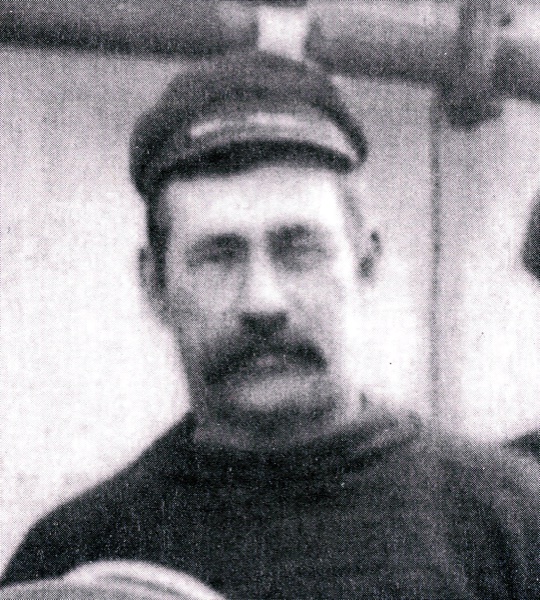
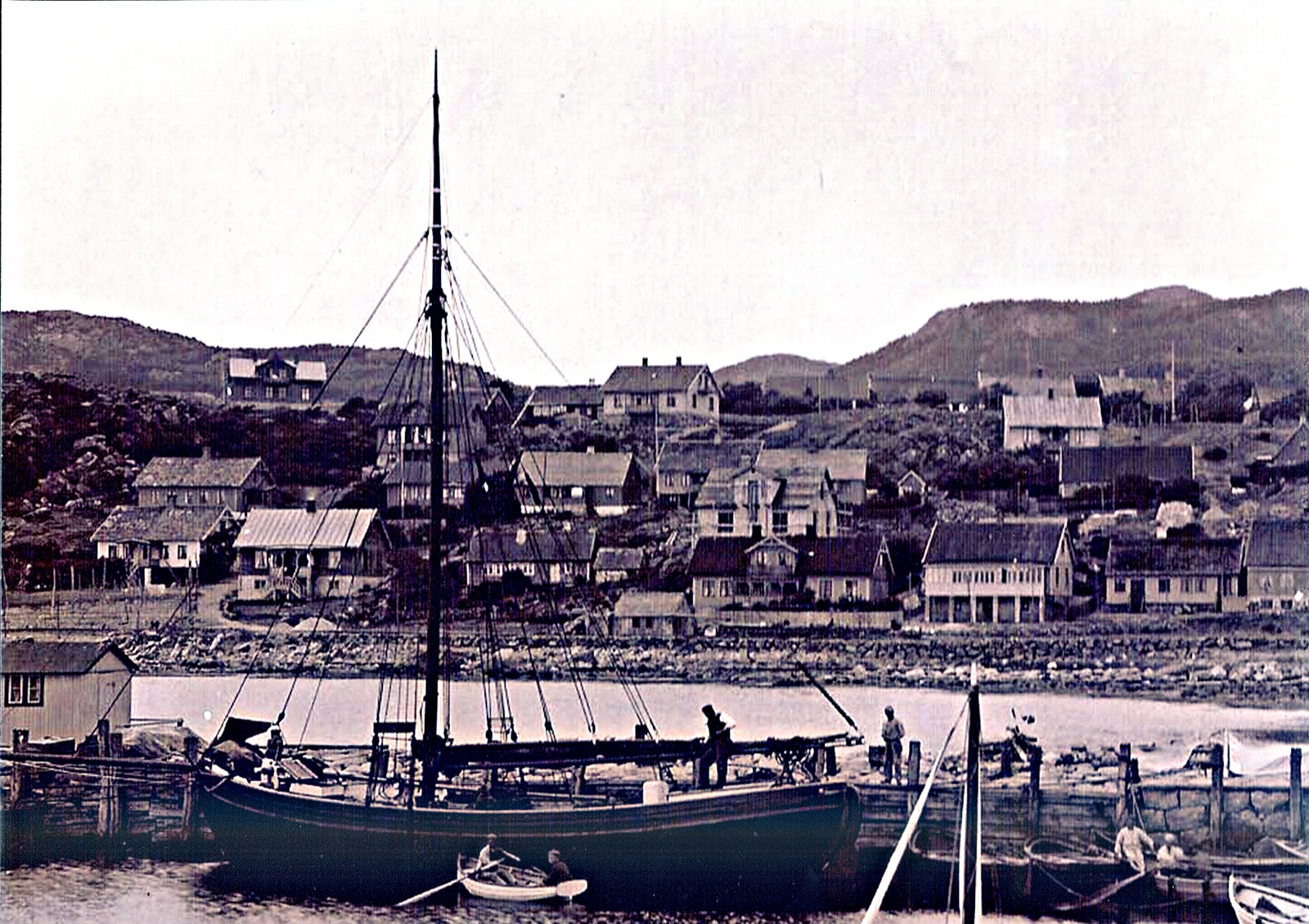
For a long time we naively believed that the lens had been transported by horse and cart, or possibly by rail. But then we met a Mölle resident who knew better: the lens had been brought here by sea. He knew this for certain, because the man who shipped it here was none other than his own grandfather, the sea captain Georg Svensson from Mölle. He had photos of both Georg (b. 1869) and his small decked boat Helga, about 40 feet (approx. 12 m) long.
It was a responsible and honourable assignment Georg was given when he was chosen for the 1900-nautical-mile voyage through dangerous waters to Paris to bring home the precious cargo. Georg, known as Jorje, was an experienced skipper and a well-known figure in Mölle; every day he could be seen at Ruffen, the sailors' haunt by the harbour. He was a tall man with a bushy black moustache (outwardly not unlike Captain Haddock). He is said to have been a rather quiet person. With a dark blue skipper's cap perched high on his head and a pipe in the corner of his mouth, Georg was perhaps one of the last of the old skipper types in Mölle.
Helga was a decked so-called jakt, a small boat sailed close to the coast. She carried less than 10 tonnes in all, with a crew of no more than three. Earlier, in the 1890s, Helga had among other things shipped “stone chippings” from the loading jetties in Mölle to ports in Skåne and Denmark. The voyage to Paris is said to have been her longest ever.
The long voyage
In Mölle the boats were launched at the end of March, so the long voyage probably started at the beginning of April at the earliest. The voyage raises many questions. How did they choose the date of departure? There were no meteorological aids for forecasting the weather at the time. Perhaps the question was discussed with the old sea dogs at Ruffen. How long did the voyage take, and how many were on board? We have no certain answers. We estimate that the journey would have taken about 12 days each way along the coasts of Jutland, Germany, Holland and Belgium and through the English Channel, before they probably sailed up the Seine all the way to Paris.
After loading in Paris they headed home again with the precious and fragile lens of hand-ground crystal. One can imagine that conditions on board the jakt were tense, with worries about cargo and boat. Perhaps Helga was sighted from Kullaberg at the beginning of June, and it must have been a great event when Georg sailed into Mölle harbour. Sailors and villagers surely gathered around Helga to hear about the voyage and inspect the remarkable cargo before it was loaded onto a horse and cart for the haul up the steep gravel road to the lighthouse. And at Ruffen, Georg no doubt had to tell the story of his adventures many times to interested and impressed listeners.
How did they get the lens up into the lantern room?
The curved, shard-like prisms were set in segments and lay well packed in wooden crates with protective krollsplint (dried, horsehair-like palm-leaf fibres). The segments were hoisted or carried up into the lighthouse and then assembled on site. The manufacturer had engraved its name and a number on every segment, and the frame was marked in the same way. That way they knew in which order and in which place each one belonged. The whole lens was thus screwed together inside the lantern room, and it is large: each of the three lens panels measures 2.55 m in diameter.
On 9 September 1900 the lighthouse was lit for the first time with the new super lens, becoming the most powerful and highest lighthouse in Scandinavia. It has faithfully turned and shone for the benefit of shipping ever since. Stand next to it and follow its movement, and you cannot help but feel its power.