Lighthouse story
The Oslo ferry Prinsesse Margrethe runs aground
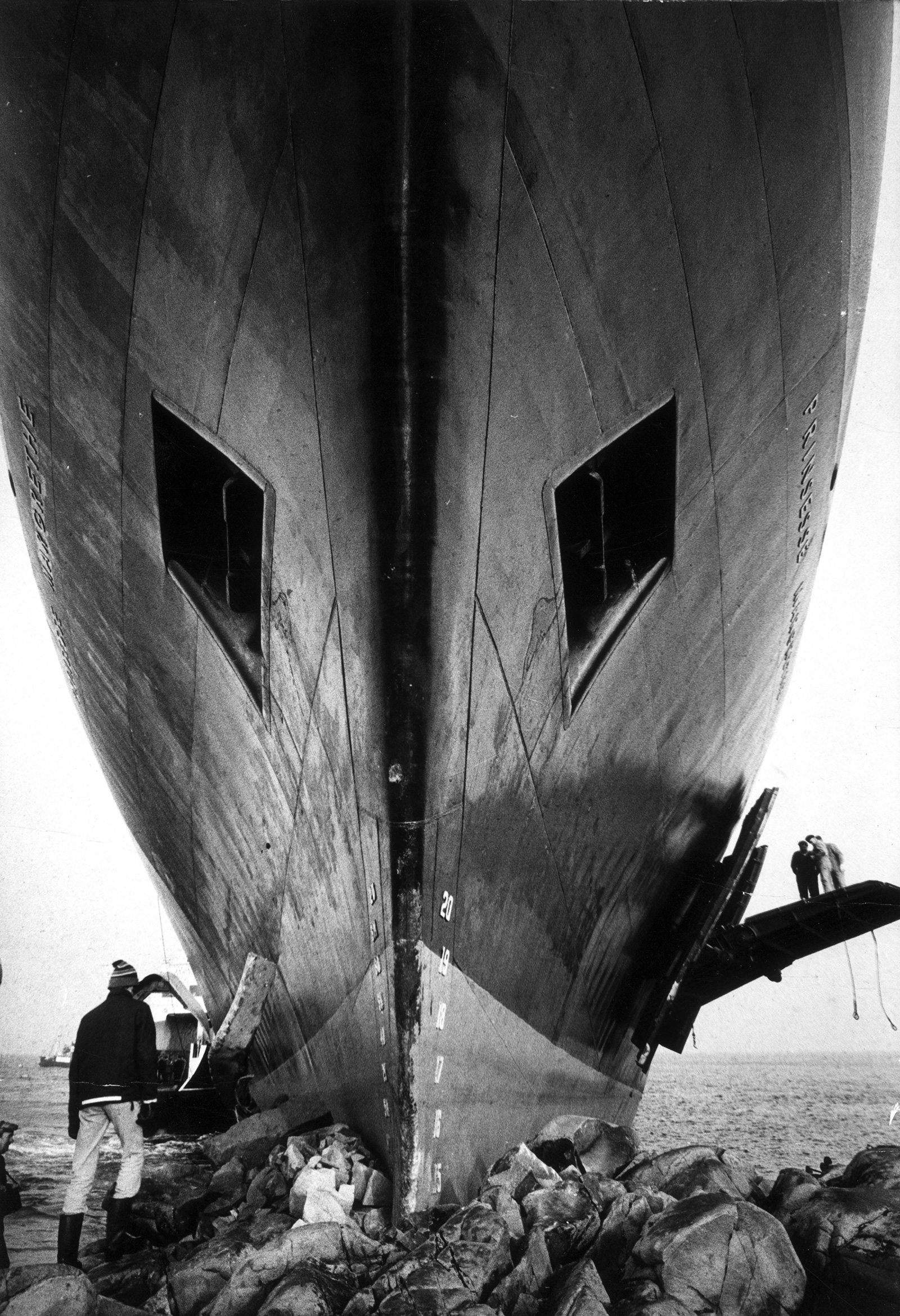
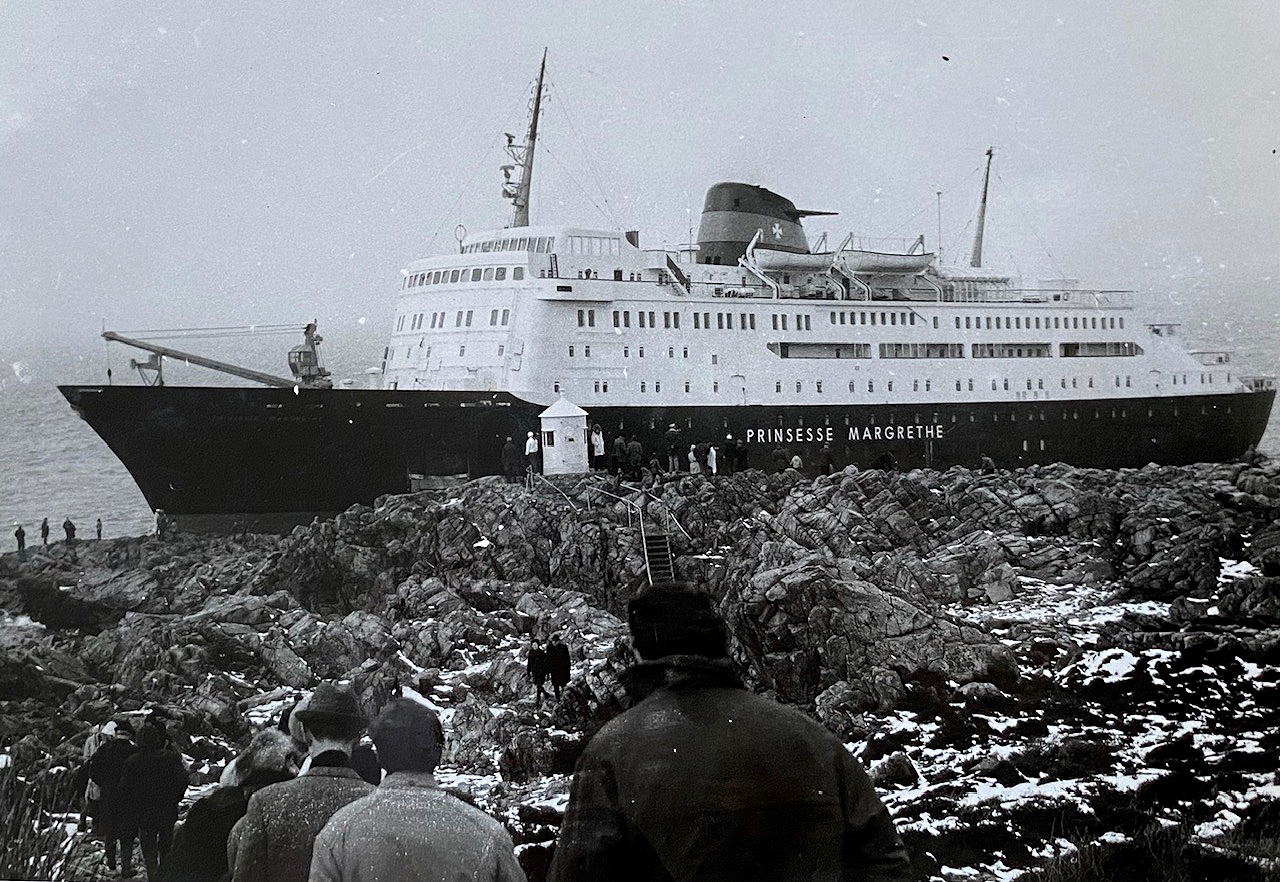
Suddenly she was just standing there, the gigantic Oslo ferry, stranded high up on the bedrock at the tip of Kullaberg. The ship had modern equipment and visibility was clear. The question everyone asked was: how could it happen?
Sunday morning, 31 January 1971, was clear, with a wind of only 5 m/s. Ivar Kyhlberg, the lighthouse master on duty at Kullen Lighthouse, had just had his morning coffee and was looking out over the sea as usual. A new day was dawning and looked set to be calm. He did not yet know that this morning would be one of his more memorable ones.
A light was approaching fast from the north, heading straight for the tip of Kullen. Surely the ferry would turn away soon? The lighthouse master rose from his chair: what on earth?
The peace was broken, first by the ship's wailing sirens and finally by a terrible crash. It was 05.32, and the Danish Oslo ferry Prinsesse Margrethe, with three men on the bridge, ran at high speed straight into the rock at the small Kullen West light, right out on the Kullahornet point.
The lighthouse master had to close his eyes and look again to believe them. A 20-metre-high Oslo ferry sat firmly aground just below the lighthouse, right beneath him. A few minutes later a mate came climbing up the rock and asked to borrow the telephone.
None of the 453 passengers or 125 crew were injured, and after a few hours everyone could be evacuated to the ferry Kärnan from Helsingborg.
The maritime inquiry two days later showed that both the helmsman and the lookout had tried in vain for almost 10 minutes to get the chief officer, Poul Aksel Larsen, to change course. Only he was allowed to alter course. “We're too close to Kullen!” they shouted. Larsen just stared through the binoculars as if sleepwalking, without answering.
Only four minutes before the crash did he give the order: —HARD TO STARBOARD, FULL SPEED ASTERN! But it was too late. The ferry, 8,000 tonnes travelling at 19 knots, could not be stopped. With sirens wailing, the three on the bridge could only watch helplessly for four endlessly long minutes as the disaster came inexorably closer. The ferry ran almost 10 metres straight up onto the bedrock.
The inquiry showed that Larsen had suffered a total blackout and memory loss from the start of his watch at 04.07 until 05.32, when the collision was a fact. He testified that on the Saturday he had drunk only one snaps with lunch, and two beers and two snaps with the warm liver pâté open sandwich at 20.30.
Captain Jörgen Hertz discovered immediately after the collision that the position log was completely empty from 04.07. Not a single position had been entered, and he could only conclude that there was no reasonable explanation for the accident. All the lighthouses along the west coast were shining clearly.
A few hours later the captain discovered that Larsen had filled in the log afterwards. When confronted, Larsen again had no memory of how this had happened.
Lighthouse master Kyhlberg testified that the Oslo ferry normally passes Kullen Lighthouse with almost a nautical mile (1852 m) to spare. Chief officer Larsen's last words at the inquiry were:
—I woke up and saw a terrifying sight of cliffs and a lighthouse, then it went bang!
—It was as if the Devil himself was grinning at me through the windscreen!
The chief officer was acquitted under the Danish penal code, but was dismissed and sentenced to 60 days in prison and a 1-year ban from his profession under the Danish Merchant Shipping Act for “lack of a sense of responsibility”.
Despite everything, Larsen was lucky in his misfortune. The ferry had slid up a stony slope in a calm sea, and the same day it could be towed to a shipyard for repair. During the night before Tuesday a storm blew up that would have turned the ship into a wreck had it still been there. Had it run aground 10 metres further south, it would have hit a sheer rock face. Had it gone in at a sharper angle, its side would have been torn open and the ferry would probably have sunk.
In 1971 it was a punishable offence for crew members to intervene if the officer in command was considered to have lost control of the ship. The maritime law has since been changed.
The lifebuoy hanging on the second floor of Kullen Lighthouse is a gift from the Torekov sea rescue station, which was first on the scene after the accident.